How the Practical Wisdom Series grew - and what each book is really asking.
Where do books begin?
It's a question I've been asked more than once, and the answer isn't always straightforward.
Sometimes a book begins with a particular experience. Sometimes it's a conversation, an observation, or a question that refuses to go away. Occasionally, the starting point is something as ordinary as a stone in your shoe.
When I began writing Thinking Inside Out, I wasn't setting out to create a series of books. I simply wanted to explore some of the things I'd learned about life, resilience, change and the way we make sense of our experiences.
Over time, other questions began to emerge. Some were connected to the first book. Others arrived from quite different directions.
Four books later, I find myself looking at a collection that I hadn't originally planned, but which seems to belong together.
Perhaps that's how some of the most interesting journeys unfold. We don't always recognise the destination when we first set off.
And so, for this first article, I thought I'd offer a little glimpse behind the curtain: where the books came from, what each one explores, and why I believe they belong in the same conversation.
Thinking Inside Out
A Practical Guide to Clarity, Resilience and Purpose
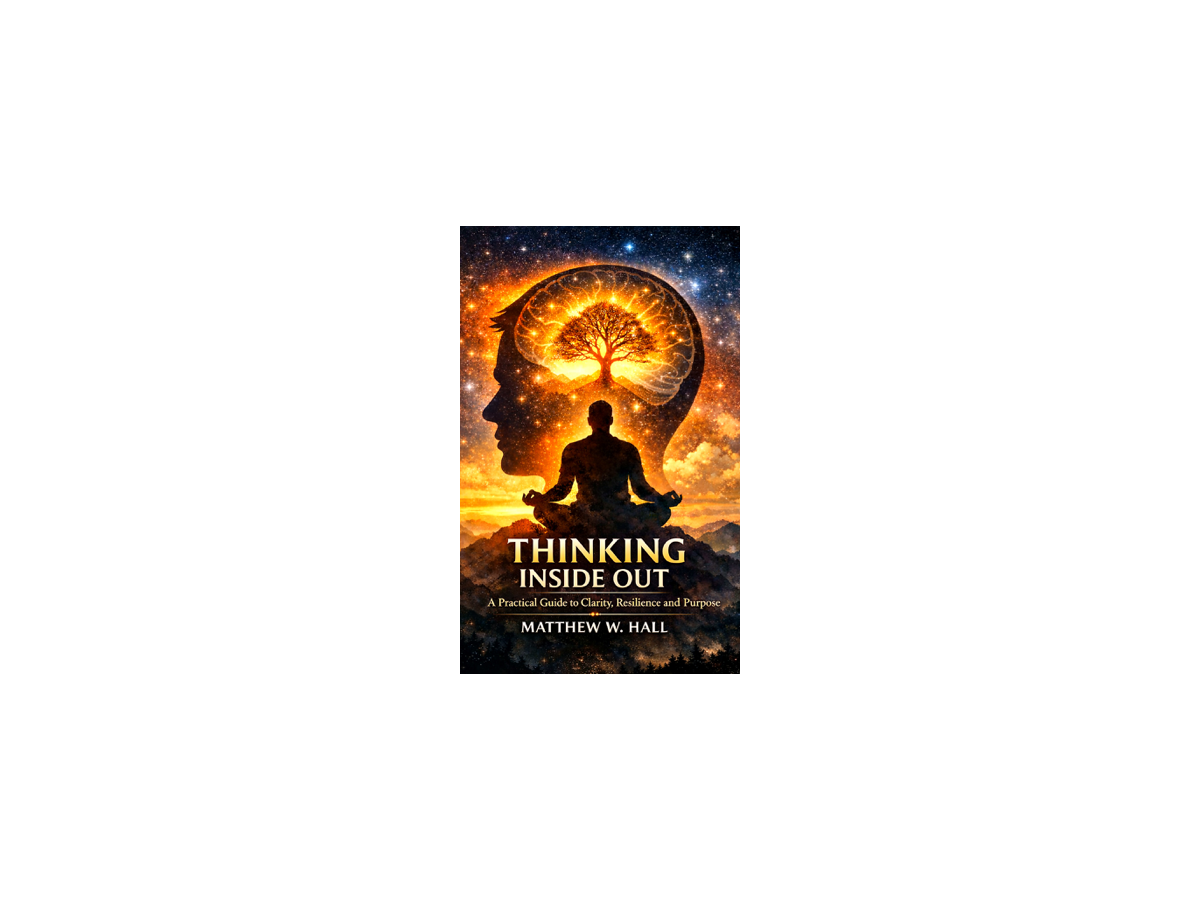
What if changing how we see things could change how we experience them?
This was the book that started it all.
For much of my working life, I was involved in situations where decisions mattered, circumstances changed quickly, and certainty was often in short supply. Later, studying applied positive psychology and coaching psychology gave me another perspective on something I'd witnessed many times: the relationship between how we think, how we respond, and what we believe is possible.
But I didn't want to write an academic textbook.
I wanted something accessible. A book that could sit beside a cup of coffee, encourage a little reflection, and offer practical ideas that readers could take into their everyday lives.
Thinking Inside Out explores themes including mindset, resilience, gratitude, purpose and personal growth. Its central invitation is to become more curious about the relationship between our inner world and the lives we experience.
Not because positive thinking can somehow make life's difficulties disappear. It can't.
But because learning to recognise our thoughts, question our assumptions and choose our responses can make a meaningful difference.
It was the beginning of a conversation I wasn't quite ready to finish.
The Porch Light
A Practical Guide to Change, Courage and Coming Home to Yourself

What helps us find our way when life takes an unexpected turn?
Some books are written from a collection of ideas. Others grow out of experiences that change the way we understand ourselves.
The Porch Light belongs a little more to the second category.
Life rarely follows a perfectly drawn map. We make plans, build careers, establish routines and develop ideas about who we are. Then something changes.
Sometimes we choose that change. Sometimes it chooses us.
And occasionally, we discover that the person we've become is no longer quite the person we want to be.
The porch light became a simple metaphor for something I believe matters deeply: the possibility of finding our way home to ourselves.
Not necessarily returning to who we once were, but recognising the values, relationships and qualities that help us navigate the next part of our journey.
The book draws on personal experience, including my own relationship with alcohol, and explores what it means to make changes that are both difficult and worthwhile.
There are no miraculous transformations here. No promises that courage will always feel comfortable.
Instead, there's an invitation to recognise that change can begin quietly, with a decision, a conversation or a small act of honesty.
Sometimes the light we need isn't very bright.
It simply needs to be left on.
Don't Ignore the Stone in Your Shoe
A Practical Guide to Recognising What Matters and Making Meaningful Change
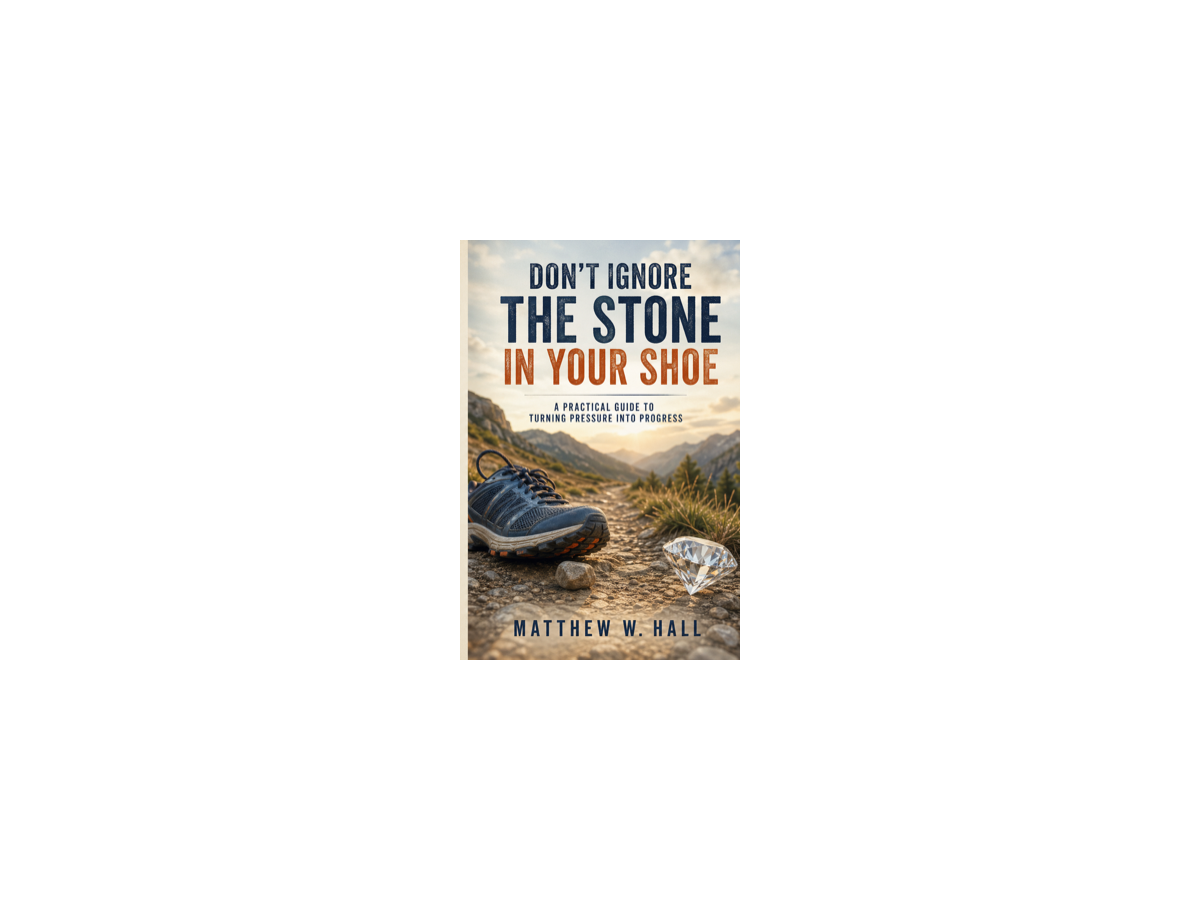
What are we tolerating that deserves our attention?
This book began with a wonderfully ordinary observation.
A small stone in your shoe isn't usually a catastrophe.
At first, it's a minor irritation. You adjust your stride, move your foot, perhaps convince yourself it will settle somewhere less uncomfortable.
And sometimes it does.
But often, the longer you ignore it, the more uncomfortable the journey becomes.
It struck me that life can work in much the same way.
We become remarkably skilled at accommodating things that trouble us. Unhelpful habits, difficult conversations, neglected ambitions, relationships that need attention, or simply the persistent feeling that something isn't quite right.
None of these necessarily demands a dramatic response.
But they may deserve more attention than we're giving them.
Don't Ignore the Stone in Your Shoe explores the importance of noticing these small signals before they become larger problems.
It's about recognising what matters, developing the courage to examine uncomfortable truths, and understanding that meaningful change doesn't always require a grand gesture.
Sometimes it begins by stopping, sitting down and removing the stone.
A simple idea, perhaps.
But simple doesn't always mean easy.
It's Not My Trauma
A Practical Guide to Staying Human Under Pressure
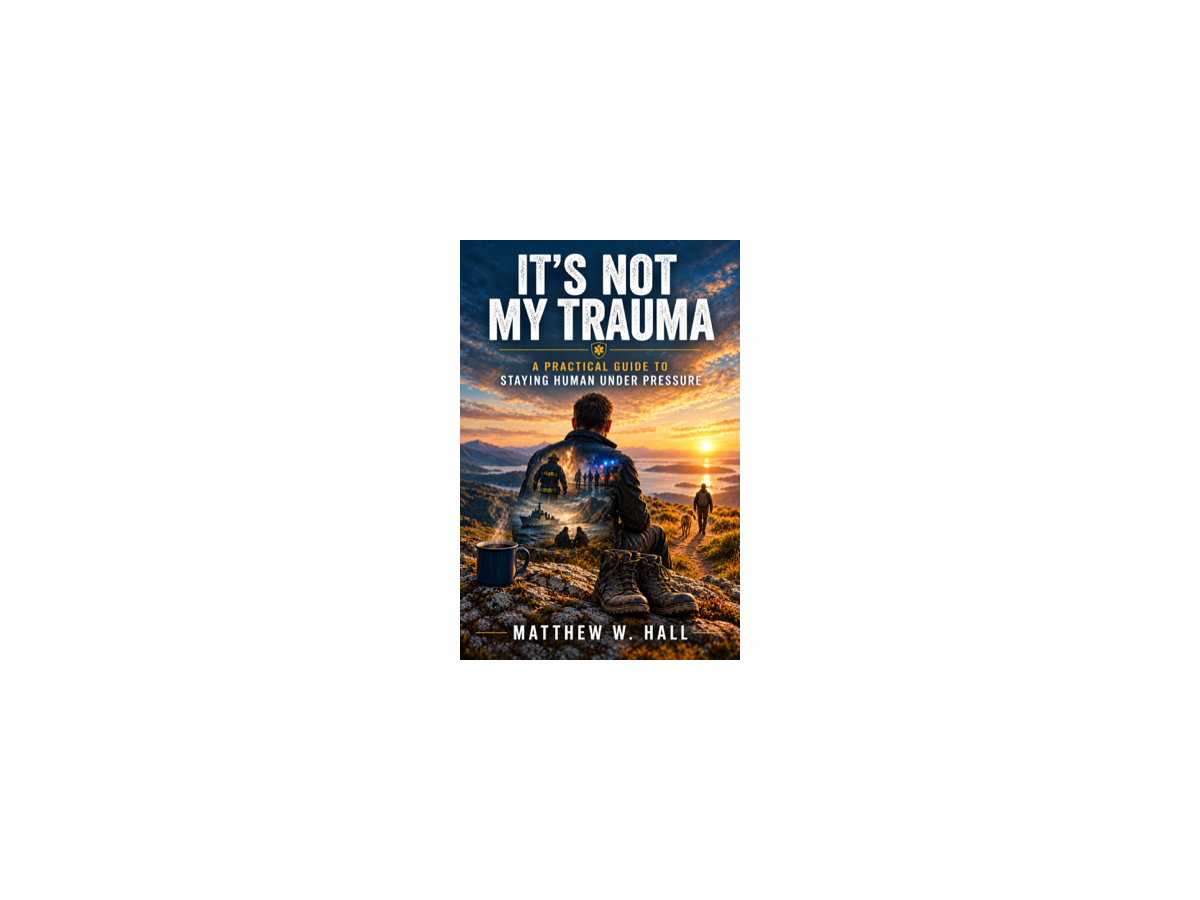
How do we care for others without losing sight of ourselves?
This book grew from a rather different landscape.
My years in the Royal Navy and London Fire Brigade brought me into contact with people experiencing some of the most difficult moments of their lives.
Emergency services, healthcare, the military and many other caring professions operate in environments where distress, uncertainty and responsibility are familiar companions.
We develop skills, routines and professional identities that help us do the work.
Often, those skills are remarkable.
But there's another side to the story.
What happens to the people who repeatedly step into difficult situations on behalf of others?
How do they process what they've witnessed? How do they maintain their humanity while doing work that sometimes requires emotional distance? And what happens when the uniform comes off, the shift ends or the professional role is finally left behind?
It's Not My Trauma explores the relationship between compassion, responsibility, resilience and the cumulative weight of exposure to other people's suffering.
It isn't about claiming ownership of experiences that belong to someone else.
Nor is it about suggesting that everyone who works under pressure will inevitably become damaged by it.
It's about recognising that being capable of carrying something doesn't necessarily mean we should carry it alone.
And that remaining human is not a weakness in demanding work.
It's something worth protecting.
Where the books meet
Looking back at these four books, I can see connections that weren't entirely obvious when I began writing them.
Thinking Inside Out asks us to examine how we see the world.
The Porch Light explores how we navigate change and rediscover what matters.
Don't Ignore the Stone in Your Shoe encourages us to notice what we've been overlooking.
And It's Not My Trauma considers how we remain ourselves while responding to the needs and difficulties of others.
Different starting points, certainly.
But perhaps they're all exploring variations of the same underlying question:
How can we live more thoughtfully, respond more wisely and remain connected to what matters?
That's what I've come to think of as practical wisdom.
Not possessing all the answers. Not reaching some imaginary point where life becomes effortless, predictable or permanently comfortable.
Rather, it's developing the curiosity, awareness and courage to engage with life as it actually unfolds.
It's also worth remembering that books don't emerge in isolation.
They grow from experiences, conversations, mistakes, discoveries and the wisdom of people we've encountered along the way.
Some of those people taught us deliberately.
Others probably had no idea they were teaching us anything at all.
And sometimes the most valuable lessons arrive disguised as interruptions to our carefully made plans.
An ongoing conversation
I occasionally think about the curious journey a book makes.
It begins privately, often as little more than a few words in a notebook.
Gradually, those words become paragraphs, chapters and eventually something that can be held in the hand or opened on a screen.
Then something rather wonderful happens.
The book leaves the writer's desk.
It becomes part of somebody else's experience.
A reader might recognise something familiar, question an idea, discover a useful perspective or simply find the reassurance that someone else has wondered about the same things.
And that's where the conversation becomes interesting.
Because the meaning a reader takes from a book won't necessarily be identical to the meaning its author had in mind.
Nor should it be.
I've always believed that the books live on the page, but they also live in the heart, the mind and in conversations.
The Practical Wisdom Series continues to grow, and I suspect there are more questions waiting to be explored.
For now, though, these four books have made their way into the world.
Each has its own story, its own purpose and its own invitation.
And perhaps one of them contains a question you've been asking yourself.
You can explore each of the books in more detail by clicking on its cover above, or visit the Non-Fiction Books page to discover the complete Practical Wisdom Series.
Thank you for joining me behind the curtain.
There's always coffee on.
Matthew W. Hall
October 2026
