Letters From The Potting Shed
Issue 005: ©Matthew W. Hall October 2026
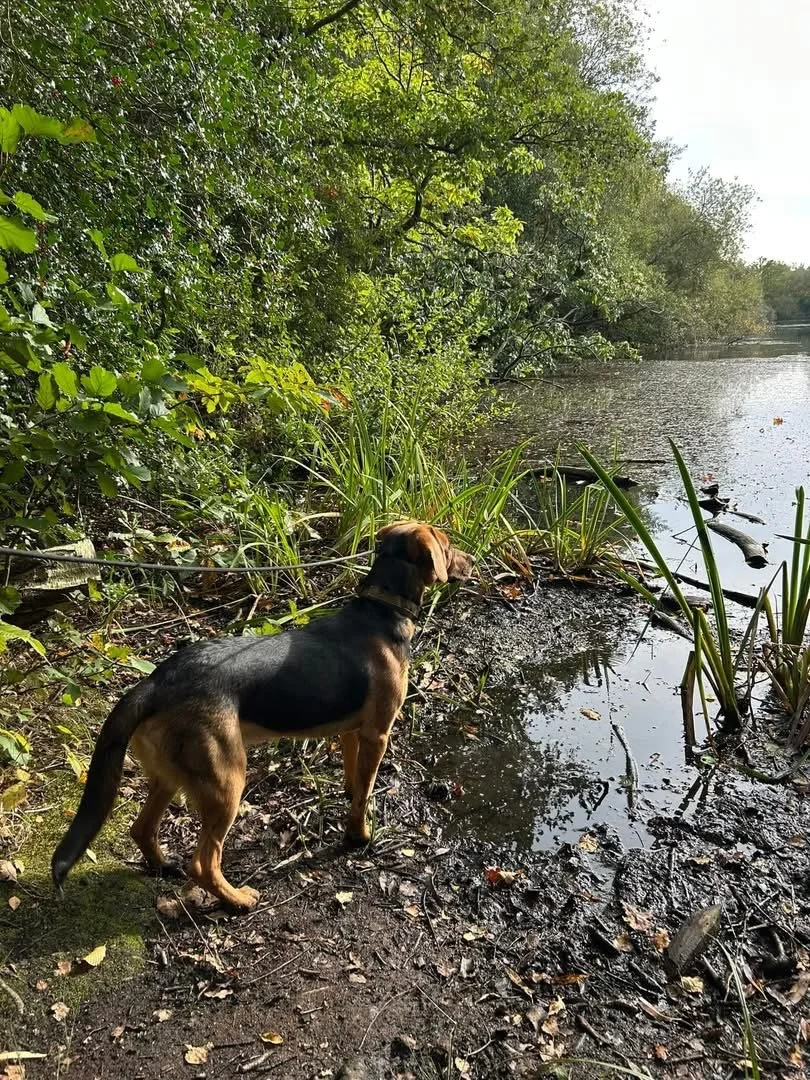
Barney teaches me a lot about being engaged in life every day.
There is a particular kind of impatience that comes with planting bulbs.
You prepare the soil, make a little hole, place the bulb carefully inside, cover it over and stand back to admire your work.
And then nothing happens.
The following morning, you look again.
Still nothing.
A week later, there is no discernible difference between the patch of earth you have carefully tended and the patch beside it that you haven't touched at all.
Perhaps the bulb was planted too deeply. Perhaps the soil is too wet. Perhaps something has eaten it.
Perhaps you should dig it up and have a look.
Which, of course, is precisely the wrong thing to do.
The bulb is already getting on with the business of becoming something. It simply has no obligation to provide us with a daily progress report.
I've been thinking about this quite a lot recently.
Not just about bulbs, although October is a perfectly respectable month for such thoughts, but about our rather peculiar relationship with waiting.
We tend to regard it as the space between doing something and getting a result. An inconvenience to be endured. An absence of progress.
We send an application and wait for a reply. Submit a manuscript and wait for a decision. Plant something and wait for it to grow.
In an age when we can track a parcel almost to the individual doorstep, waiting without an accompanying explanation can feel suspiciously like being forgotten.
Surely something should be happening?
And yet, more often than we realise, something is.
Beneath the woodland floor, networks of fungal threads spread through the soil. Mycelium quietly explores, absorbs and connects. Much of its work remains invisible until a mushroom appears above ground, seemingly overnight.
To the casual observer, something has suddenly happened.
To the fungus, it has been happening for quite some time.
I rather like that distinction.
We notice the arrival, but rarely the preparation.
We celebrate the flower, but seldom the roots.
During the past few weeks, I've been learning a little more about this through the business of writing and publishing books.
Writing is, in many ways, a wonderfully private occupation. You sit with an idea, follow its twists and turns, and gradually help it find its way onto the page.
Eventually the manuscript is finished, polished and sent out into the world.
And then you wait.
Several of my books have recently been making their way through the machinery of international publishing and distribution.
They have been submitted, reviewed, processed, approved and occasionally rejected. There have been dashboards to check, links to follow and numerous opportunities to discover that patience is considerably easier to recommend than to practise.
I'm reasonably confident that checking the same publishing dashboard seventeen times does not persuade the machinery to work any faster.
Nevertheless, it is remarkable how often one feels compelled to try.
The experience has reminded me of something I learned long before I began writing books.
There is a difference between doing what is necessary and trying to control what happens next.
We have responsibilities in the first part.
We have considerably less authority over the second.
Of course, waiting is not always wise. Sometimes we need to ask a question, change direction or take action.
A gardener who never waters anything should not be surprised when the garden struggles.
But neither does a gardener improve a newly planted bulb's prospects by digging it up every Tuesday to inspect the roots.
There is a time for intervention.
And there is a time to leave things alone.
Knowing the difference is something of an art.
Waiting, of course, is no guarantee of success.
Not every bulb flowers. Not every manuscript finds a publisher. Not every carefully laid plan unfolds as expected.
But perhaps we can decide how we occupy the space between effort and outcome.
Instead of treating waiting as wasted time, we might turn our attention elsewhere.
There is always another corner of the garden that needs tending. Another idea worth exploring. Another book waiting to be read.
Or perhaps a dog standing beside the back door, wondering why anyone would spend so much time staring at a computer when an entire world of interesting smells is available outside.
Barney has a fairly uncomplicated philosophy on these matters.
If something interesting is happening, investigate it.
If nothing interesting is happening, go and find something interesting.
And if neither option produces satisfactory results, have a nap.
It's difficult to argue with the logic.
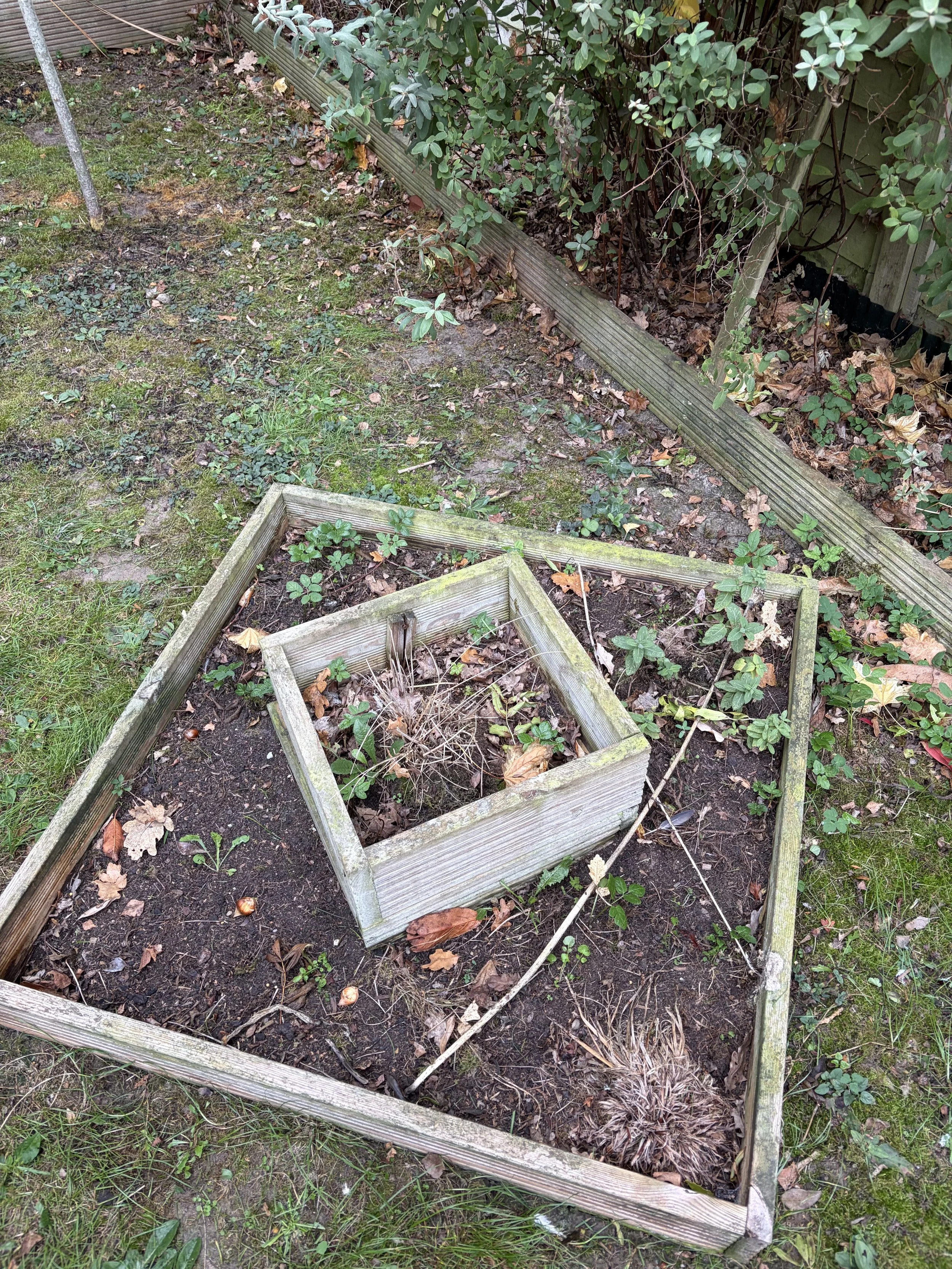
A quiet patch of earth already getting on with becoming.
This week, after several weeks of submitting files, checking details and allowing various publishing systems to do their work, I opened my website and followed the links to the different bookstores.
Everything worked.
The books were there.
Not accompanied by trumpets or a shower of confetti. Just quietly available, waiting for someone, somewhere, to discover them.
There was something deeply satisfying about that.
Not because it guaranteed that thousands of people would suddenly rush to buy them.
It doesn't.
But because a little more of the work had found its place in the world.
And perhaps the most encouraging part was realising that I had enjoyed the process, including the parts that required patience.
Life offers countless versions of this experience.
Learning a new skill. Rebuilding confidence. Recovering from illness. Finding a way forward after something has changed.
Progress rarely follows a neat, measurable timetable. Sometimes the most important changes take place where nobody, including ourselves, can immediately see them.
We continue to do what we can. Pay attention. Make adjustments when needed.
And occasionally resist the temptation to dig everything up just to reassure ourselves that it is still growing.
There is an old-fashioned pleasure in putting the kettle on and allowing something to take the time it needs.
The water will boil when it boils.
The tea will brew when it brews.
And the dog, having concluded that nothing worthwhile is happening in the kitchen, will probably return to his bed.
At least until he hears the biscuit tin.
Perhaps patience is not simply the ability to wait.
It is the ability to remain engaged with life while waiting.
To tend what needs tending, while giving other things the space to develop.
After all, the gardener who spends the entire winter watching one patch of soil may miss the extraordinary things happening everywhere else.
And that would be a shame.
There is a whole garden out there.
Stay curious
Keep noticing
Until the next time
🌱🐾☕️📚🍄🟫
